

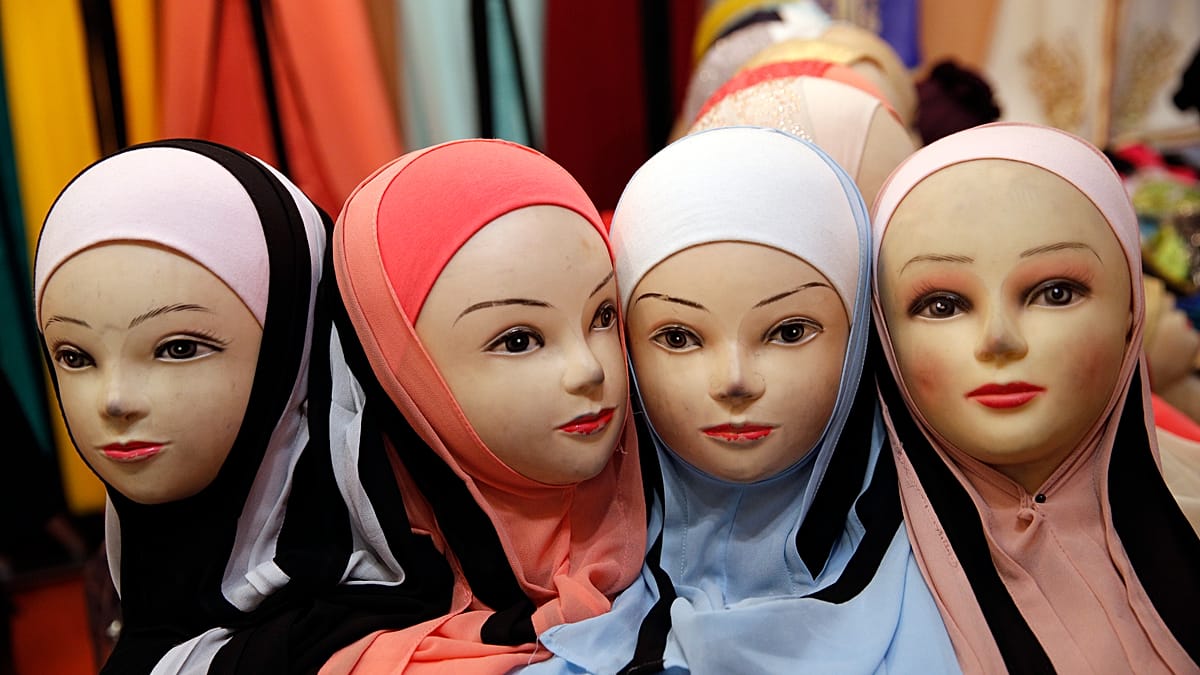
Since 1 September, Austria has banned headscarves for female pupils under 14 at state and private schools. Repeated breaches of the rule could lead to fines of €150 to €800 for parents.
Since the start of the 2026/27 school year on 1 September, female pupils in Austria under the age of 14 have been prohibited from wearing any headscarf at school that “covers the head in line with Islamic traditions.”
Teachers’ representatives say the new rule has generally been implemented calmly and respectfully. At the same time, some schools have reported conflicts and, in some cases, aggressive reactions.
The new law was already controversial before it came into force, with critics questioning whether it was compatible with freedom of religion and the principle of equality.
Who deny girl basic education ? The gouvernement that want every pre 14 child to be on the same lvl or islamist capture parent that want to force their belief on their children ? Nice inversion
Your whole next paragraphe is just a profound naive view of humanity. Why can t we just be all friend ? Kinda same level. But to be short, cause it doesn’t work. If it work that issue would have never arrived in the first place right ? Also they can refuse the culture if they find it abusive… U have no idea how family is far stronger powerful societal cercle on individual than any other. The opportunity to refuse isn’t something than most can obtain.
The goverment that knows that if you pass a law like this, there will be parents who will first try to cut their kids from education rather than to try comply with it. Worse the kids will grow up to think that the state is their enemy not their ally. It has been like this in every country that had tried this approach. You have no idea how dynamics work with in these families. Like most children, when small, they look up to their parents and they want to emulate their style, culture behaviour. It may be their dad/mother that are telling them to cover their head, but at that age they don’t resent this. So they don’t view a state banning them this right as the saviour, they see it as opression and they shy away from education. That is why the correct approach to this is through education not laws.
For the second part, there have been countries that tried this route in the past. It cost them decades of internal conflict that is still going on today. It is naive to think that banning something will magically fix problems associated to it. No, it will make it worse, it will marginalize and isolate those kids from the society. They will grow up resenting the state and cling even harder to their cultural norms.
Have u any source regarding what u advance? Causrnin my research on how Muslim country fight extremism they dont employ only one type of solution. It s a pix of solution where u always find one wich is kinda everything they can. But mostly they enforce the study of their version of islam. Which they can cause they it s culturally implemented in their country from a long time.
So do u prefer the state enforce law on believer or on the religion itself ?
Also it s part of the Islamic brotherhood propaganda that in any circonstance Muslim are persecuted for any and all reason. And it s always give hand got the arm eaten. So no we dont have to be tolerant toward thoses.
Societal isolation of extremism is a good strategy and it will give result in the long run.
But yeah alone this decision won’t fix all issue. But I dont see how a liberal western society can rule what islam is practice. But yeah going to mosque, religious gathering and event having a 0 tolerance policy toward extremism is also necessary.
Tldr the veil ban alone isn’t enough. It isn’t a perfect policy like most are but its definetly better than doing nothing.
I like how you first downvote and then ask for references. Shouldn’t it go the other way, ask for references and downvote if not provided? I really don’t think you are here for the discussion aspect but anyway in case someone wonders to this corner of the topic here is a useful summary:
For effect of headscarf/religious symbols ban on various aspects of life from work to education, you can look at couple of prototypical examples: Turkey (education, public service), France,Belgium,Netherlands (education), Canada (public service). I don’t know all of them to the same depth but know that they have been the topic of numerous studies related to this. Some that I can refer to:
A general article but focusing on the law in France:
Canada
Germany This is not religion based, it is language based (right wing government also love language banning as an assimilation technique, so it relates to the topic)
Turkey This is a page from hrw presenting multiple links. It is too long to give a summary, but the headline is discriminatory effects of head scarf ban on societal level. And in Turkey, headscarf ban has never erased that identity. It in fact strengthened it and was likely a contributing factor in AKP’s (the current religious oppressive goverment of Turkey) rise to power (this is my interpretation, not written here).
These bans are coming from a place of extremism. So even if one were to assume they were banning extremism in all cases (and they are not always banning extremism in all cases), you are trading individual level extremism with state sponsored extremism. Of course if you have right wing tendencies you won’t view this as extremism the same way someone who wants their four year old daughter to view a headscarf won’t view that as extremism. How ever state sponsored extremism is often much more dangerous. But it is funny that for all this talk about assimilation, right wing even really fails at this because all their techniques of assimilation end up strengthening the identities they want to suppress. Guess why? Because they don’t actually want these people to be invisible. They want them to be more visible then before, but they want this in a way which creates societal tension so that they can leverage this tension. It is the right wing government supporters who think these policies propagate their national identity and world-view to their country where as it is quite literally doing the opposite. Even more funny is that in countries where religious parties and right wing parties co-exist, both of the groups actually benefit from this polarization. I can only laugh at how nicely they are being deceived in this regard. And in effect a state which bans religious symbols from schools is the same as one that forces it.
You got this wrong, veil ban isn’t just not enough. It does not achieve any of the intended effects, It is just a tool to the right-wing politics for driving a wedge between communities. A state deciding what people should do with their religious identities is there only for one reason, create political tension in a country and then use that tension as potential to strengthen their grip.
Ok your turn, do you have references for any of the things you advance?